Local Tea-Stalls practices raise health concerns: unsanitary conditions endanger customers
 admin
0 comments
admin
0 comments
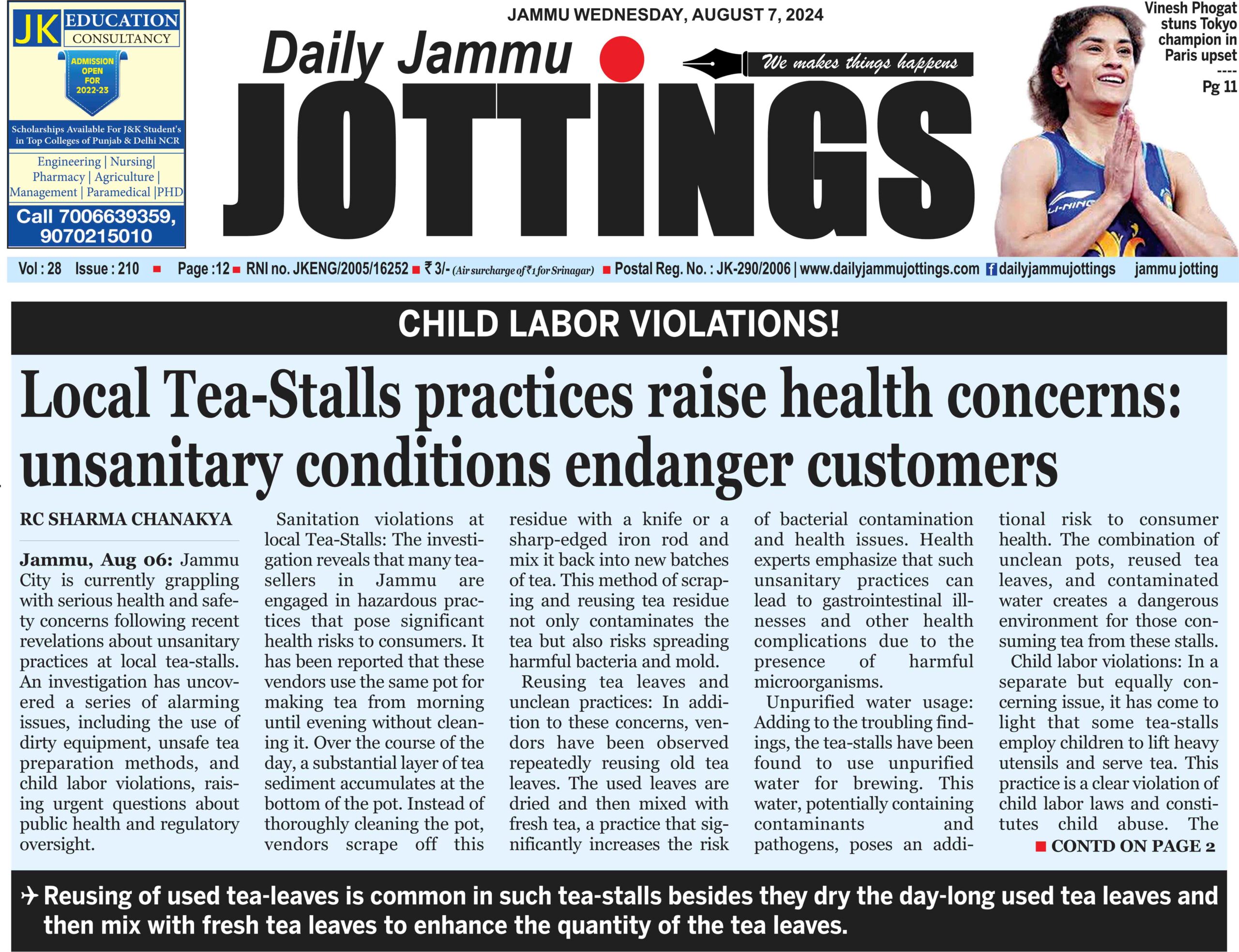
Child Labor Violations!
- Reusing of used tea-leaves is common in such tea-stalls besides they dry the day-long used tea leaves and then mix with fresh tea leaves to enhance the quantity of the tea leaves.
RC Sharma Chanakya
Jammu, Aug 06: Jammu City is currently grappling with serious health and safety concerns following recent revelations about unsanitary practices at local tea-stalls. An investigation has uncovered a series of alarming issues, including the use of dirty equipment, unsafe tea preparation methods, and child labor violations, raising urgent questions about public health and regulatory oversight.
Sanitation violations at local Tea-Stalls: The investigation reveals that many tea-sellers in Jammu are engaged in hazardous practices that pose significant health risks to consumers. It has been reported that these vendors use the same pot for making tea from morning until evening without cleaning it. Over the course of the day, a substantial layer of tea sediment accumulates at the bottom of the pot. Instead of thoroughly cleaning the pot, vendors scrape off this residue with a knife or a sharp-edged iron rod and mix it back into new batches of tea. This method of scraping and reusing tea residue not only contaminates the tea but also risks spreading harmful bacteria and mold.
Reusing tea leaves and unclean practices: In addition to these concerns, vendors have been observed repeatedly reusing old tea leaves. The used leaves are dried and then mixed with fresh tea, a practice that significantly increases the risk of bacterial contamination and health issues. Health experts emphasize that such unsanitary practices can lead to gastrointestinal illnesses and other health complications due to the presence of harmful microorganisms.
Unpurified water usage: Adding to the troubling findings, the tea-stalls have been found to use unpurified water for brewing. This water, potentially containing contaminants and pathogens, poses an additional risk to consumer health. The combination of unclean pots, reused tea leaves, and contaminated water creates a dangerous environment for those consuming tea from these stalls.
Child labor violations: In a separate but equally concerning issue, it has come to light that some tea-stalls employ children to lift heavy utensils and serve tea. This practice is a clear violation of child labor laws and constitutes child abuse. The engagement of minors in such work not only infringes on legal regulations but also endangers the physical well-being and development of the children involved.
Call for government action: In light of these findings, there is an urgent need for government intervention. Health officials and community leaders are calling for several critical actions:
1. Registration and Monitoring: The government should implement a comprehensive registration system for all tea-stalls to monitor compliance with health and safety regulations. This would help ensure that vendors adhere to required hygiene practices.
2. Inspection Teams: Dedicated inspection teams should be constituted to conduct regular and thorough inspections of tea-stalls. These teams would be responsible for enforcing cleanliness standards, addressing violations, and ensuring that vendors use safe water and properly clean their equipment.
3. Addressing Child Labor: The government must enforce child labor laws more strictly and take immediate action against those exploiting minors. This includes conducting inspections and providing support to ensure that children are not engaged in hazardous or illegal work.
Public health advisory: Consumers are advised to avoid purchasing tea from these stalls until the necessary improvements are made. Those who may have consumed tea from these vendors and are experiencing health issues should seek medical attention and report any symptoms to local health authorities.
This situation highlights the urgent need for stringent food safety practices and adherence to labor laws. It serves as a reminder of the responsibility of both vendors and regulatory bodies to safeguard public health and ensure that ethical standards are upheld in all business practices.