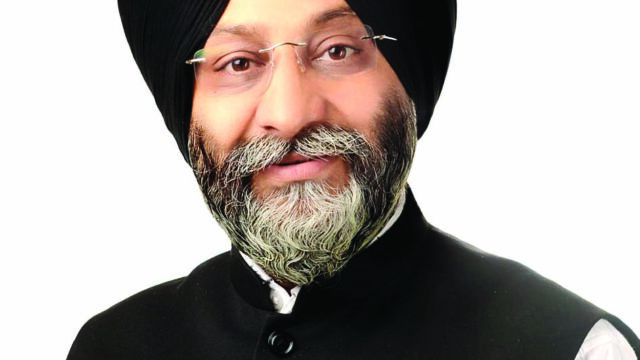
Functional devolution land reforms, self-employment & agriculture development need top priority: Dr Kuldeep Sharma
 admin
0 comments
admin
0 comments
73rd Amendment & State Legislation!
jj correspondent
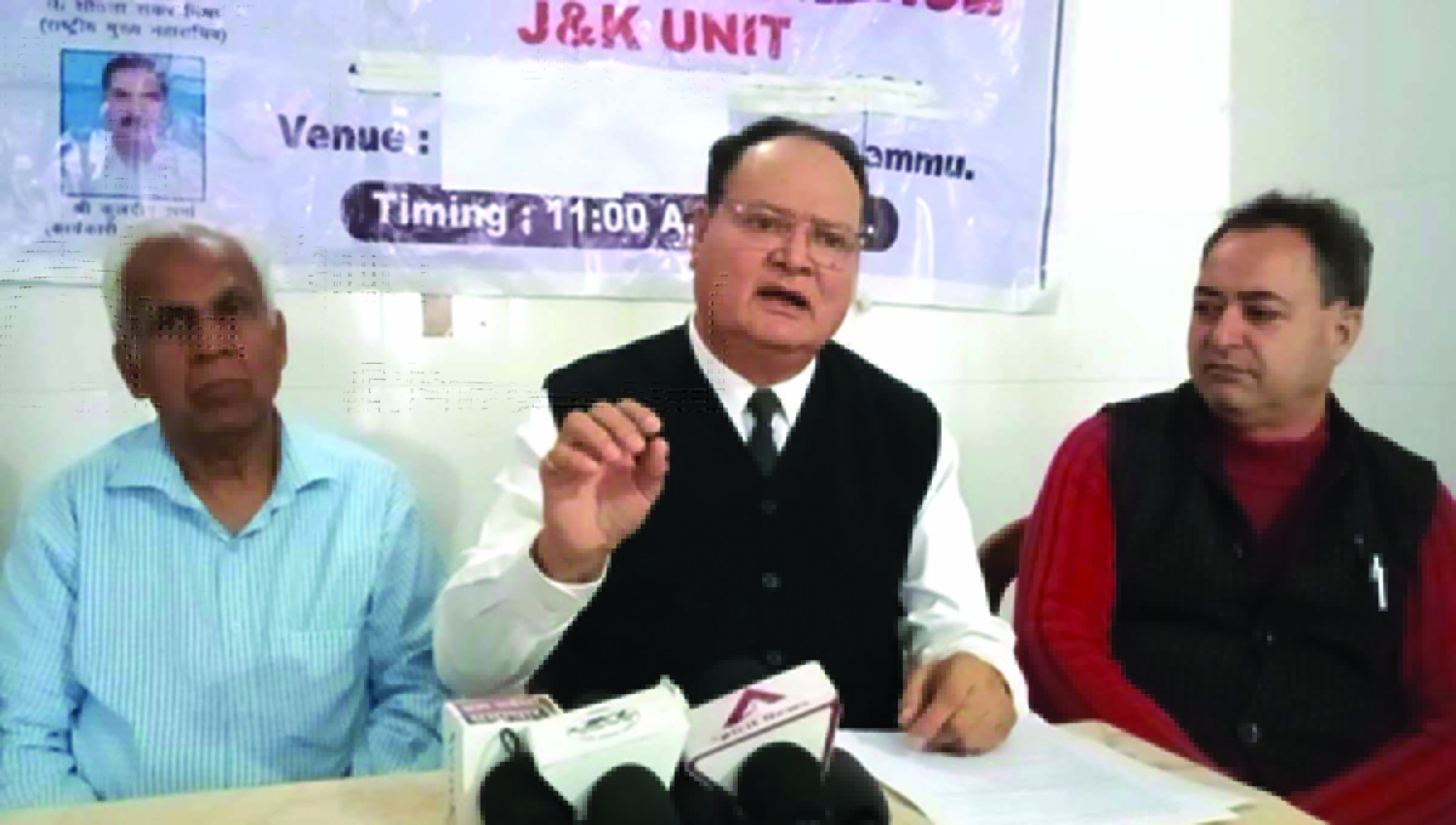
Jammu, Mar 31: The All India Panchayat Parishad (AIPP), Jammu & Kashmir unit president Dr Kuldeep Sharma said that it has been resolved to take the policies and programmes of Panchayti Raj to the last man of the UT so that the purpose of 73rd amendment may be achieved and the living standard of the people be lifted.
While addressing a press conference, he said, “Let us drive our villages towards its growth. Let Gandhiji’s dream of Gram Swaraj come true.” has been the mission and message of All India Panchayat Parishad (AIPP) since 1958. AIPP with the active participation of its affiliated State/UT units, including Jammu Kashmir Panchayat Parishad, has been carrying forward this movement to strengthen grass root level democracy across India. He was flanked by Mr Jugal Kishore Gupta incharge J&K and Ladakh, acting president Mr Kuldeep Kumar, Pt RC Sharma chief general secretary, Sh.Devender Sharma Joint Secretary and Ashwani Sharma Urban President.
Local Self Government, including Panchayati Raj System, has been described as ‘that part of the government which deals mainly with local affairs, administered by authorities subordinate to the State Government but elected independently of the state authority by the qualified residents.’ This system is considered to be more competent in solving local problems. The system seeks to accelerate socio economic development and bring about equity and social justice. This has been made possible through the Constitution (Seventy- third Amendment Act, 1992 and subsequent state legislations.
The mandatory provisions of the Amendment have been followed but the State legislations differ considerably as far as devolution of powers is concerned. The field experience suggests that Panchayati Raj Institutions (PRIs) are working as bureaucratically controlled, State funded delivery arms of government with a semblance of democratic set up. Lack of clarity, on the part of administration, about the concept of self- government may be one of the reasons but manifestation of internal resistance by the governing elite not to share power with people appears to be more closer to the truth. There is urgent need to make them genuine institutions for participatory Self Government. These institutions are fast deviating from their primary role of human development towards a better and brighter future.
None can deny the fact that the Constitution (Seventy-third Amendment) Act, 1992 that came into effect from 24th April, 1993 is a historic legislation but the fact remains that its spirit has not been translated into practice.
It appears that necessary amount of thought could not be given between the enactment of the Amendment Act 1992 and subsequent state legislations. There has been criticism about the breach of Article 243(G) in letter and spirit by a number of States. The State governments could endow PRIs with more powers, including, some judicial in nature, to dispose off petty cases and resolve local conflicts.
There has been no substantial devolution of administrative and financial powers of the states. Due attention needs to be paid towards Land Reforms, Agriculture development, self-employment and social activities/reforms.
Many of the State Acts have made provisions for supervising and controlling the Panchayats through bureaucracy. These provisions go against the principles of democracy. The ultimate accountability of local governments should be to the local electorate.
Autonomy is closely related to economic independence. Accountability to the people, rather than to a bureaucratic system, needs to be the hallmark of autonomy of Panchayats. None of the states seem to have paid adequate attention to make the Panchayat Bodies financially viable.
Many statutory powers, now being exercised by field level bureaucracy, may have to be transferred to the Panchayats. It is pertinent to mention here that, in J&K, various matters pertaining to the development and strengthening of PRIs need urgent remedial steps. There is also a dire need to visibly empower the PRIs and facilitate co-operation and co-ordination between the administration and the PRI representatives. There are reasons to believe that people here prefer ‘Gram Sabha’ over anything else to have peace, justice and development in democratic India. AIPP, most humbly prays to Prime Minister of India- Sh. Narender Modi to consider the majority view that rural masses in J&K will feel comfortable if the existing PRIs are given an extension of two years beyond November’ 2023.