Rajouri Day April 13; Lt Col Zorawar & 2nd Lt Rane saviors of Rajouri
 admin
admin 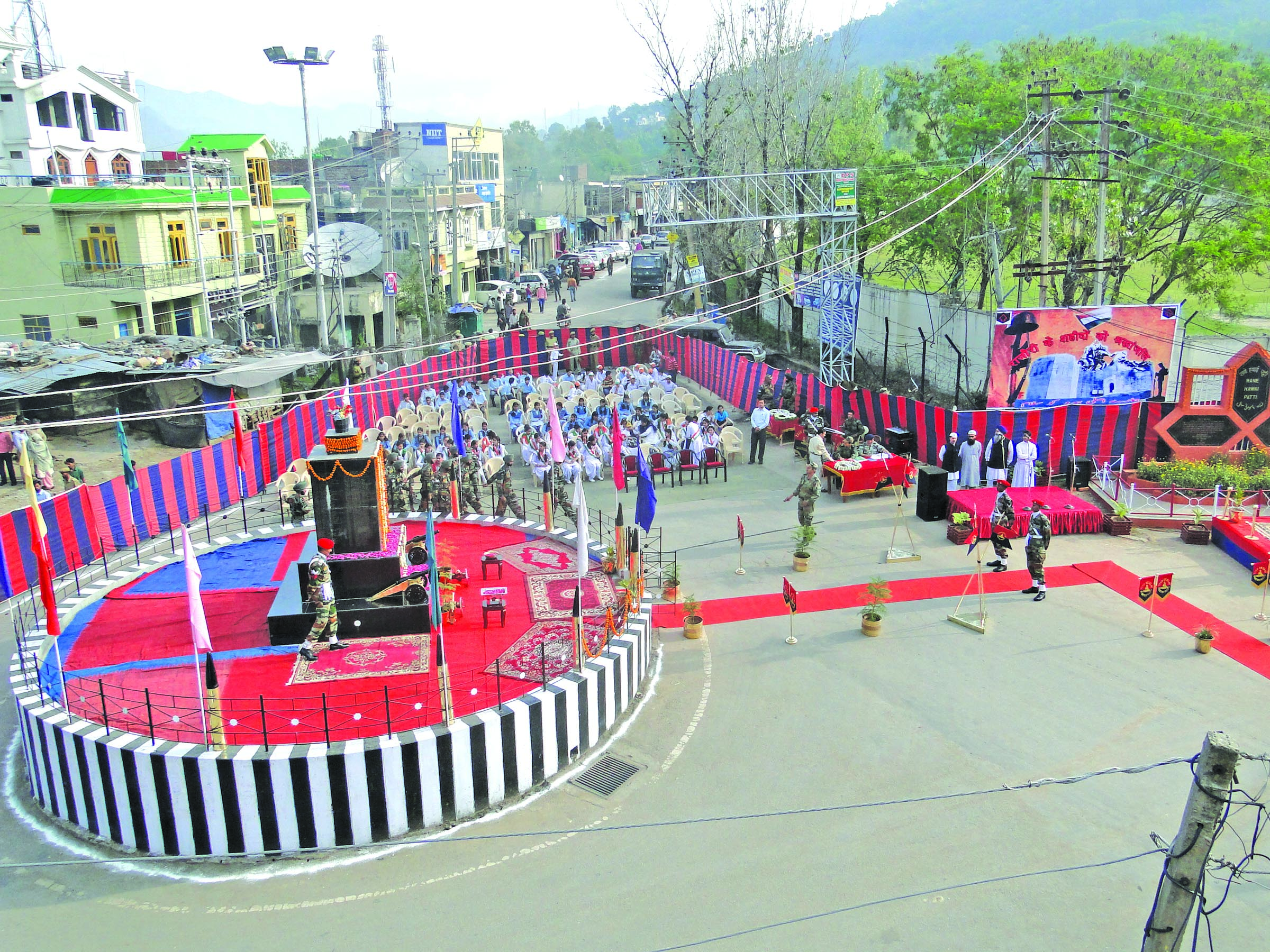
Shyam Sood
Rajouri, Apr 13: On 26-27 October 1947 Maharaja Hari Singh acceded J&K into Indian Union and requested armed assistance. Pakistan couldn’t digest the accession and it sent treacherous marauders tribesmen and others backed by Pakistan soldiers to Rajouri-Poonch districts.
When the people, including J&K, were celebrating the first Diwali in Independent India, these intruders entered Rajouri town and started committing brutalities on innocent civilians, including children and women and had killed more than 20000 people till April 13, 1948 when the Indian army liberated Rajouri from their clutches.
Lt Col Zorawar, Commandant Central Indian Horse (CIH) under Nowshera based 19 Brigade was given the task to liberate Rajouri and the operation was divided into three phases.
Facing repeated attacks by the enemies and clearing the road –which was damaged and mines were planted by the intruders–from Nowshera to Rajouri, troops under the command of Lt Col Zorawar reached Rajouri on April 11 at 5pm.
Many Indian soldiers sacrificed their lives for the integrity of India and Lt Col Zorawar and 2nd Lieutenant Rama Raghoba Rane (known as the savior of Rajouri) were honored with Maha Vir Chakra (MVC).
After throwing out the invaders with the recapture of Nowshera, Indian troops commenced their advance on 8th, April 1948 from Nowshera to Rajauri to protect the natives from the atrocities of the raiders.
Under the command of Zorawr Singh, 4 Dogra was assigned the task to capture Barwali ridge, 11 km north of Naushera and the enemy suffered heavy causalities and abandoned the ridge.
Beyond Barwali, the enemy had planted mines on the road, culverts were damaged, road was blocked with big trees and boulders, etc, that obstructed the movement of Indian army as tanks couldn’t cross over these obstacles.
During this critical phase, 2nd Lt Rane and his section of 37 Assault Field Company, who was attached to 4 Dogra, performed a heroic action of clearing the stretch of road for the Infantry to advance.
As the Engineer section started clearing the mine fields on 8 April, two Army engineers were killed and five others, including Rane were injured in enemy mortar fire.
However, Rane and his men completed the task by evening and enabled the tanks to push forward towards Rajouri.
The Indian troops advanced another 13 km on this day before they encountered another major road-block with the enemy pickets on the adjoining hills guarding all approaches.
2nd Lieutenant Rane drove to the roadblock in a tank and crouching under it, blasted it with mines and was thus able to clear the road before the end of the night.
On 11 April, he again worked relentlessly with his team for 17 hours to open the road to Chingas and beyond.
2nd Lt. Rane made a substantial contribution in facilitating the Indian advance on Rajauri.
During next two days tanks were targeted at all important places where the enemy could be hiding including Rajouri fort.
The sudden arrival of an armoured force caused bewilderment, confusion and dismay among the enemy which was apparent in an intercepted radio message: “Tawi River full of Buffallows (code word for tanks) from Chingus to Rajouri. Impossible to hold Rajouri”.
On April, 13 at 10.30 am Indian Army entered the Rajouri town and liberated it from the clutches of Pakistanis.
The gallant actions of 2nd Lieutenant Rama Raghoba Rane to open this route to Rajauri earned him the highest war-time gallantry medal, Param Vir Chakra.
A senior army officer said , his citation reads, “But for the grim determination and tireless diligence of 2nd Lieutenant Rane, who worked ceaselessly, our column could not have reached Chingas – an important feature which secured for us a vantage position to advance further”.
Indian Army has named ‘Advance Landing Ground’ at Rajouri as ‘Rane Hawai Patti’ in honor of this Brave Savior of Rajouri.
Rane was born on 26 June 1918 at Chendia, Karnataka and was commissioned in the Corps of Engineers on 15 December 1947.
The 27-year-old commandant of CIH, Lt Col Zorawar Singh had, by his brilliant command of armour and his daring use of the Tawi River as his axis of advance, conducted one of the most outstanding light tanks exploits of all time.
It was, however, to be the last time he saw active service and later he retired from the service as Maj Gen who commanded the Indian Military Academy at Dehradun.
The Stuart light tanks used by Zorawar Singh are now an exhibit at the war memorial at Division headquarters at Rajouri. It bore both his name and his Motto–“Fortune Favors the Brave”