Deep-rooted corruption plaguing sections of J&K Police, one more HC in CBI net
 admin
admin JAMMU, APR 3: In a hard-hitting reminder of the deep-rooted corruption plaguing sections of the Jammu & Kashmir Police, yet another serving official has been caught allegedly selling justice for cash.
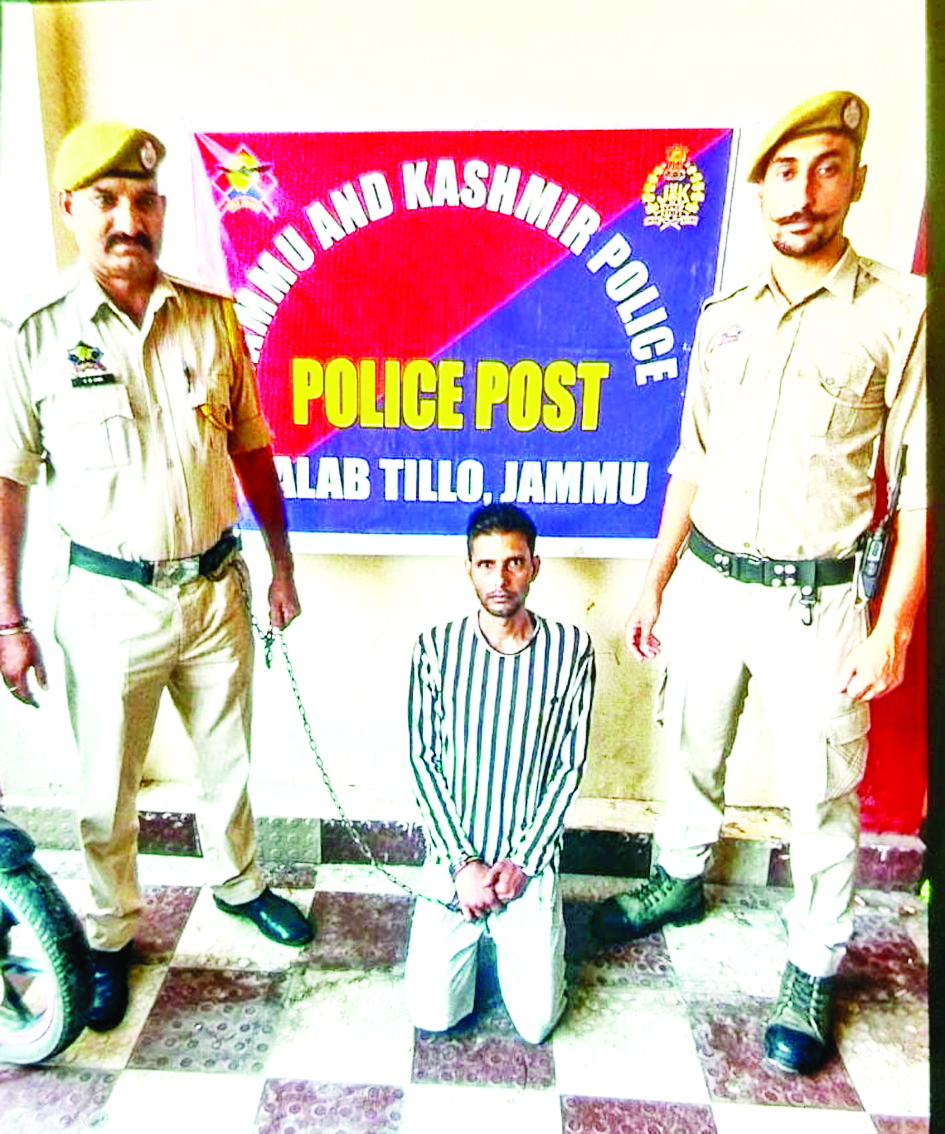
The Central Bureau of Investigation (CBI), India’s premier anti-corruption agency, has arrested Head Constable Som Dutt, a resident of Ramgarh, District Samba, posted as Investigating Officer at Police Station Bishnah, for allegedly accepting a bribe—further exposing what appears to be a disturbing pattern of misconduct within the law enforcement machinery.
According to highly placed sources, the case unfolded after a complainant approached the CBI with serious allegations that the officer was demanding money to manipulate the course of an ongoing police investigation. The accused had allegedly assured “favourable action,” including altering sections of law or influencing the direction of the case, in exchange for cash.
Taking cognizance of the complaint, the CBI first conducted discreet verification before laying a carefully planned trap operation.
The operation culminated in Som Dutt being caught red-handed while accepting ₹10,000 near the premises of Police Station Bishnah. The tainted currency was immediately recovered, and the accused was taken into custody.
Following the arrest, the CBI team shifted the accused to its Jammu office for sustained interrogation and legal formalities.
Officials are now in the process of recording statements, preserving evidence, and preparing the case for prosecution under the Prevention of Corruption Act, which deals with public servants abusing their official position for illegal gratification.
Sources indicate that further aspects of the case, including any possible involvement of other officials or previous instances of misconduct, are also being examined.
This latest arrest is not an isolated incident but part of a worrying series of corruption cases that have surfaced across Jammu and Kashmir in 2026, particularly involving police personnel at the cutting edge of investigations.
In February this year, the CBI had arrested Head Constable Ashok Kumar of Police Station Gharota. He was allegedly functioning as an Investigating Officer in a counter FIR and had demanded a bribe to remove a person’s name from the case. Acting on a complaint, the agency executed a trap and caught him red-handed while accepting the illegal gratification. The recovery of marked currency notes from his possession provided crucial evidence in the case.
In another similar instance, a Head Constable posted at Police Station Bagh-e-Bahu was also arrested following allegations of bribery. A civilian complainant had accused the officer of demanding money in connection with an investigation. After verification, the CBI once again resorted to a trap operation and apprehended the accused while he was accepting the bribe.
These repeated incidents point toward a pattern where certain officials allegedly misuse their investigative authority to extort money from vulnerable individuals seeking relief in legal matters.
A clear and troubling pattern emerges from these cases—most of them are trap-based operations initiated after complaints from citizens who were allegedly asked to pay bribes for routine or lawful processes. The nature of allegations is strikingly similar: influencing investigations, altering FIR details, dropping names from cases, or shielding individuals from legal consequences. Such practices not only undermine the rule of law but also erode the very foundation of public trust in policing institutions.
The series of arrests has cast a long shadow over the credibility of the Jammu & Kashmir Police Department. While the majority of personnel continue to perform their duties with integrity, repeated exposure of corruption cases at the ground level raises serious concerns about internal oversight and accountability mechanisms. The fact that investigating officers—who play a crucial role in the justice delivery system—are being implicated makes the issue even more alarming.
At the same time, the aggressive stance adopted by the Central Bureau of Investigation is being viewed as a strong message that corruption within public services will not be tolerated. The agency’s reliance on verification-backed trap operations has ensured that accused officials are caught in the act, thereby strengthening prosecution and deterrence.
As 2026 unfolds, the steady stream of arrests signals both a challenge and an opportunity—while it exposes systemic vulnerabilities within sections of public administration, it also reflects a tightening enforcement environment. The need of the hour is not just punitive action but sustained institutional reform, stricter vigilance, and a zero-tolerance approach to corruption to restore faith in the system and ensure that those entrusted with enforcing the law remain beyond reproach.