

Allegations of Corruption and Water Contamination Spark Public Outrage
tousef raza gani
Poonch, Apr 07: The ambitious Jal Jeevan Mission, a flagship program by the central government aimed at providing tap water to every rural household, is under intense scrutiny in Poonch district, Jammu and Kashmir. Despite significant funds allocated to the project, villagers in Mandi Tehsil, particularly those in Azamabad village, continue to endure severe water shortages and contamination, prompting widespread criticism and concern over the mission’s effectiveness.
While the initiative was intended to transform the way rural households access drinking water, locals claim that the implementation has been marred by inefficiencies, delays, substandard infrastructure, and most alarmingly, allegations of corruption. In many villages, including Azamabad’s Ward No. 3, residents report that pipelines have been installed but the water supply remains irregular or nonexistent.
“We were promised water pipelines and safe drinking water, but all we have is a broken network and contaminated sources,” a local villager shared in frustration. “The money allocated for this project seems to have vanished without making any real difference to our lives.”
Despite substantial investments and lofty promises, many families are still dependent on dwindling natural springs and streams, some of which have become polluted, raising fears of waterborne diseases. “The water we’re drinking is not just dirty – it’s hazardous to our health,” another resident of Azamabad lamented.
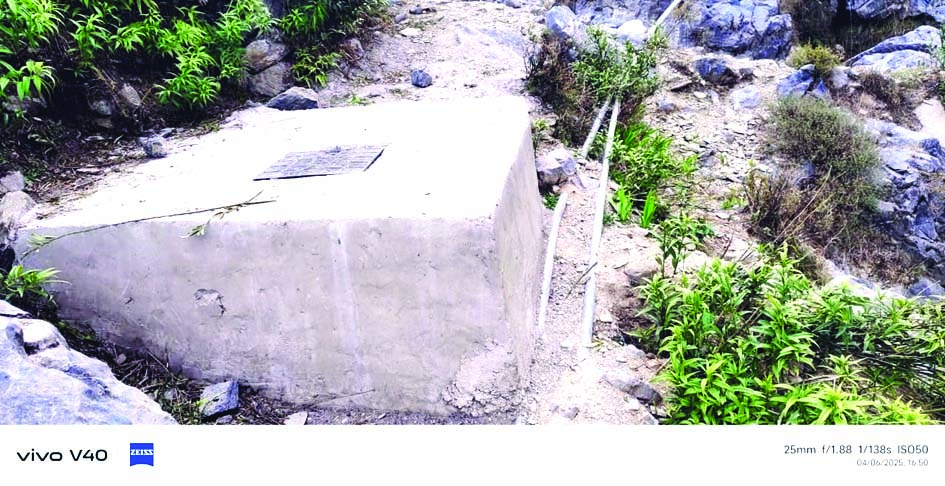
The situation in Azamabad has become particularly dire. A project intended to protect and improve a local spring has backfired. Residents claim that hundreds of thousands of rupees were spent to cover the spring and improve its water quality. However, the spring cover was constructed nearly 200 meters from the actual source, rendering it essentially useless. Worse, the cover remains open, attracting wild animals, further compromising the water quality.
Villagers also report that the water flowing through the open nallah – an exposed stream where dead animals and debris are often seen – is being used for drinking and household activities. “We’re forced to use water that’s not only unsafe but potentially deadly,” one resident said, visibly distressed by the ongoing crisis.
The pipeline system itself, designed to bring clean water to households, is riddled with faults. Pipes are misaligned, exposed, and left uncovered, which increases the risk of contamination. Despite these serious issues, the Jal Jeevan Department continues to insist that the project is fully operational.
Adding to the growing frustration, locals have raised concerns over the lack of transparency and possible corruption surrounding the project. Allegations have emerged that Junior Engineers (JEs) and Assistant Executive Engineers (AEEs) in charge of overseeing the work may have played a role in the subpar execution of the project. “The people deserve answers. Where is the money that was allocated for this project? Why are we still living without clean water?” demanded a community elder.
To make matters worse, the village’s only lineman, responsible for maintaining the water supply system, retired months ago, and no replacement has been appointed. This has left the area without the technical expertise needed to keep the water supply functional. “Since the lineman retired, no one has come to inspect or repair the system,” said another villager. “We feel completely abandoned by the authorities.”
Faced with mounting health risks and deteriorating infrastructure, residents of Azamabad and surrounding villages are calling for immediate action. They are demanding a high-level investigation into the mismanagement of the project and a thorough inquiry into the alleged corruption and negligence. With the specter of disease looming over the community, they are urging the concerned authorities to take responsibility and make the necessary reforms to restore safe drinking water to their villages.
This unfolding crisis in Poonch underscores a troubling disconnect between government promises and the reality on the ground. While the Jal Jeevan Mission was intended to be a lifeline for rural households, it has, in many areas, turned into a source of frustration and disappointment, leaving residents to question the effectiveness of the program and the accountability of those in charge.
