
The Endless Queue: Kashmiri Pandits, 35 Years of Exile, and a Dignity Denied
 admin
0 comments
admin
0 comments
The Labyrinth of Apathy: How Bureaucracy Compounds the Agony of Kashmiri Pandit Exile
Swami ‘Bayankaranand’
Jammu: For over three decades, the term “Kashmiri Migrants” has been a bureaucratic label slapped onto a community forcibly ejected from their ancestral homes in the Kashmir Valley in 1990. Driven out by Jihadists while the then-government appeared either comatose or complicit, these Displaced Kashmiri Pandits, in a cruel twist of officialese, are denied the internationally recognized status of refugees, perhaps a calculated move to sidestep obligations of dignified shelter. Their long exile has morphed into an unending ordeal, a gauntlet run daily through the corridors of the Commissionerate of Relief and Rehabilitation (Migrants), where petty matters remain stubbornly unresolved, even after 35 agonizing years.
The rise of the BJP to power in 2014 ignited a flicker of hope within the community. Yet, this hope has largely soured. The prevailing narrative for Kashmiri Pandits remains one of miserable conditions and systematic side-lining from pivotal political, social, and economic decisions. It’s a grim continuation of the harrowing experiences endured since their exodus, a testament to the failure of successive state and central governments to provide genuine security or meaningful rehabilitation. The first generation, those who witnessed the horrors of genocide and the trauma of displacement, carries the deepest scars, having lost homes, hearths, and a way of life. While a subsequent generation found some avenues through reservation policies in professional colleges, this offers little solace to the elders who bore the initial, brutal brunt.
Many Kashmiri Pandits, with characteristic resilience, have strived to keep their heads high, some even achieving remarkable success. But this masks a harsher reality for the vast majority who still grapple with making ends meet. The government’s primary support? A meagre relief sum of Rs 13,000 per month for a family of four, capped at this figure, which translates to a pitiful Rs 3,250 per individual. This paltry sum seems etched in stone, deemed sufficient for eternity by an indifferent administration. No prominent BJP leader has stepped forward to genuinely reshape their destiny by advocating for an increase to a respectable level for a community that has lost everything-a community historically revered for its intellectual prowess and unwavering commitment to education.
The focus here, however, transcends mere financial hardship. It is the deeply entrenched, systemic humiliation this community endures, particularly at the hands of the bureaucracy. In Jammu, where many sought refuge, they are often herded like cattle from one office to another within the Relief and Rehabilitation Department or local Zonal Offices, typically headed by JKAS Officers. The indignity is relentless. Day after day, these beleaguered individuals, victims of a forgotten genocide, are forced to queue outside these offices, often for trivial documents. They are endlessly harangued for documentary proofs and photocopies, a baffling charade when, under the much-touted Digital India initiative, all records supposedly stand digitized and have been submitted repeatedly. Instead of efficiently pulling data from their systems, officials invariably demand physical documents, forcing people to stand in line, often in blistering heat.
This torment doesn’t cease with bureaucratic hurdles. The tone and tenor adopted by officers, especially at the Zonal level, is often appalling, as if these educated, forcibly displaced individuals are beggars seeking alms. Zonal Officers, many of them JKAS cadre, are frequently cited for their particularly contemptuous treatment. In a recent, galling incident in the Talab Tillo area, one such Zonal Officer was witnessed berating an educated Kashmiri Pandit, well over 75 years of age, with the words: “Tu Kya Kar Raha Hai, Tera Sala Hai Who, Usko Bol Khud Aao” (What are you doing? Is he your brother-in-law? Tell him to come himself). The officer displayed no recognition that the man before him was not only double his age but likely possessed more education.
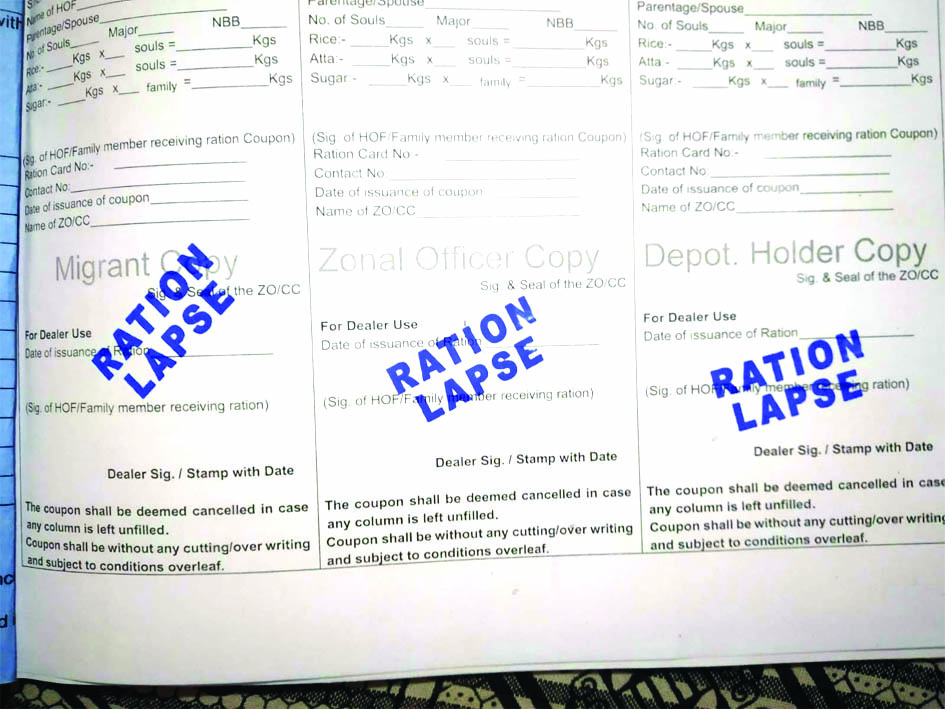
Consider the recent fiasco with monthly ration slips. An extension of 20 days was granted in April because the department itself couldn’t handle the initial rush. After individuals, including elderly men and women, and those with severe health issues, struggled up staircases to the first floor in intense heat, filled out forms, and submitted old counterfoils, they were met with further apathy. The officer, whose only task was to sign the booklets, declared he was “not in the mood” and instructed the weary crowd to return on Monday. To add egregious insult to injury, the April ration slips were subsequently stamped with “RATION LAPSE” in bold letters, a direct consequence of their own office’s delay. One can only imagine the distress of a migrant who might have taken last month’s supplies on credit from a shopkeeper, promising to submit the slip upon receipt. Is this relief, or calculated harassment? Why can’t the government issue digitized ration slips, sparing this tormented community the ordeal of queuing in scorching conditions when all data is supposedly on record?
The arrogance is galling. Why do these government officers speak so disdainfully to aged Kashmiri Pandits, individuals who have contributed profoundly to India and the world for centuries? Youngsters in the community may have, by now, grown a thick skin, inured to the behaviour of these often-self-important officials who have prospered while the community for whom relief was intended still struggles. Is it humane to leave this community to subsist on Rs 13,000 a month and a few kilos of rice and flour?
The BJP, it must be said, effectively marketed the plight of Kashmiri Pandits globally to garner votes. Yet, this same party has shown little inclination to significantly increase the cash relief that could provide genuine succour to those who desperately need it. The question remains: will the authorities ever hold these arrogant officers accountable? Will they ever demand that migrants, even the elderly, are treated with basic respect, rather than as cattle to be addressed with “tu” and “tera,” while these same officials expect deferential “Namastes`” and “Ji Jis” in return? The wait for dignity, it seems, is as long as the queues.